

Weed Control Services in Houston, TX
Learn how to identify common lawn weeds, understand treatment options, and explore local weed control services for residential and commercial properties in Houston.
Request a Service Connection → Explore Weed Control GuideUnderstanding Lawn Weed Control in Houston
Weed control in Houston involves identifying unwanted plants, understanding why they are growing, and choosing suitable prevention or treatment methods. Houston’s warm climate, rainfall, irrigation patterns, and long growing season can create favorable conditions for different types of lawn weeds.
Common lawn problems include crabgrass, nutsedge, clover, spurge, chickweed, and annual bluegrass. Some weeds appear during warm weather, while others become noticeable in cooler months. A treatment that works for one weed may not control another, and a product suitable for one grass type may injure a different type of turf.
HoustonLawnCare is an independent lawn-care information and lead-generation website. We help visitors explore available local services and request connections with independent providers. We do not directly apply herbicides or operate weed-treatment crews.
Why Do Weeds Grow in Houston Lawns?
Weeds often take advantage of open soil, thin turf, excess moisture, poor drainage, or unsuitable mowing practices. When desirable grass loses density, unwanted plants have more room to establish and spread.
Common conditions that encourage weeds
- Thin grass: Bare or weak areas provide space for weed seeds to germinate.
- Excess moisture: Frequent irrigation and poor drainage can favor sedges such as nutsedge.
- Compacted soil: Compaction can restrict healthy root growth and reduce turf vigor.
- Incorrect mowing: Cutting grass too short can weaken turf and expose soil.
- Seasonal changes: Different weeds germinate as soil temperatures and weather conditions change.
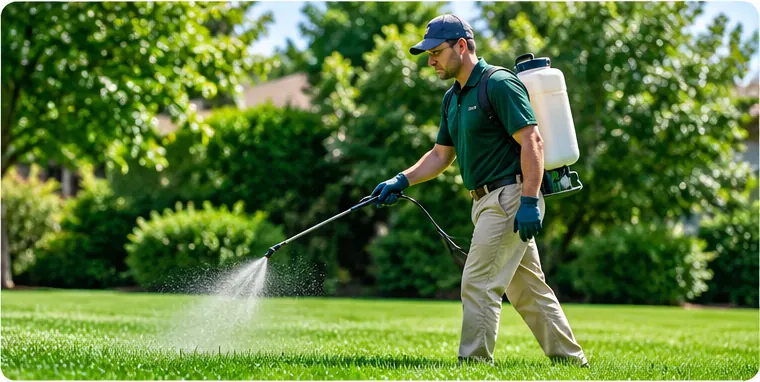
Turf density, moisture, and soil conditions influence weed growth.
Common Types of Lawn Weeds in Houston
Identifying a weed correctly is an important first step. Texas A&M AgriLife groups many common lawn weeds into three broad categories: broadleaf weeds, grassy weeds, and sedges.
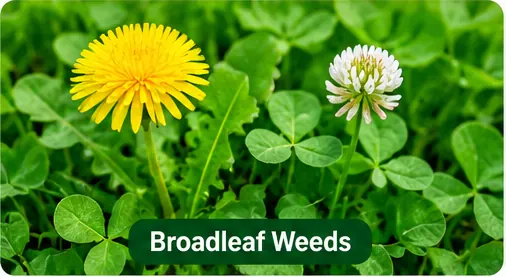
1. Broadleaf Weeds
Broadleaf weeds generally have wider leaves with branching or net-like veins. Common examples include clover, chickweed, dandelion, plantain, and spurge.
Some spread through seeds, while perennial types may return from established roots or other plant structures.
2. Grassy Weeds
Grassy weeds have narrow leaves and generally parallel leaf veins. Examples include crabgrass, goosegrass, annual bluegrass, and dallisgrass.
Correct identification matters because grassy weeds can be difficult to distinguish from desirable turf at an early growth stage.
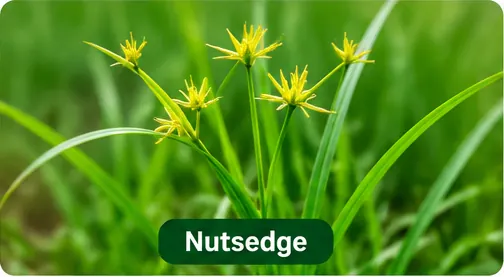
3. Sedges
Yellow nutsedge, purple nutsedge, and green kyllinga can resemble grass but belong to a different plant group.
Sedges often thrive in moist conditions. Their growth structures can make established plants difficult to control with mowing alone.
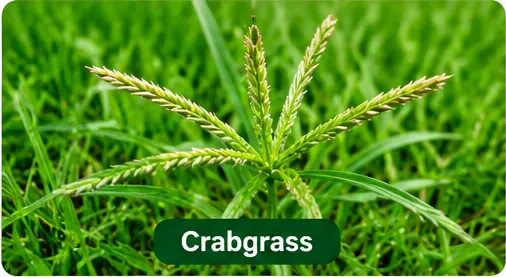
Inspect suspicious plants closely before selecting a weed treatment.
Crabgrass, Nutsedge, and Other Difficult Weeds
Crabgrass
Crabgrass is a warm-season annual grassy weed. It commonly appears in thin turf and open areas as temperatures rise. Preventive strategies focus on maintaining dense grass and, where appropriate, correctly timed pre-emergent control.
Yellow Nutsedge
Yellow nutsedge often grows faster and taller than surrounding turf. It can be associated with wet soil, over-irrigation, or drainage problems. Its underground structures help it return after the visible leaves are removed.
Annual Bluegrass
Annual bluegrass is a cool-season grassy weed that may become noticeable during cooler periods. It can produce seedheads even when the surrounding warm-season lawn is slowing down.
Spurge and Clover
Spurge can spread across open, sunny areas, while clover may establish in thin turf. Their presence does not automatically indicate one specific soil problem; identify the plant and assess the lawn before treatment.
Pre-Emergent vs. Post-Emergent Weed Control
Two common herbicide categories are pre-emergent and post-emergent. They serve different purposes and should not be treated as interchangeable solutions.
Pre-Emergent Herbicides
Pre-emergent weed control is designed to prevent or interrupt the emergence of susceptible weed seedlings. It is commonly used as a preventive strategy before targeted annual weeds germinate.
- Works before target weeds emerge.
- Timing is linked to weed germination conditions.
- Requires appropriate product selection and application.
- Usually intended for established turf when the label permits.
Post-Emergent Herbicides
Post-emergent weed control targets weeds that are already visible and growing. The appropriate treatment depends on the weed species, turfgrass variety, and product label.
- Used after weeds have emerged.
- Correct weed identification is essential.
- Small, actively growing weeds may be easier to manage.
- Some products can injure sensitive lawn grasses.
How to Prevent Weeds in a Houston Lawn
A dense, well-maintained lawn is one of the strongest foundations for long-term weed management. Good cultural practices help desirable turf compete with unwanted plants.
Maintain suitable mowing height
Different grasses have different mowing-height requirements. Avoid cutting the lawn too short, because scalping can reduce turf density and expose soil to weed establishment.
Water according to lawn conditions
Water deeply and appropriately rather than keeping the soil constantly wet. Excess moisture can favor certain sedges and contribute to other turf problems.
Improve thin areas
Investigate why grass is thinning. Shade, compaction, poor drainage, pests, and disease may need attention before weeds can be managed effectively.
Use preventive treatments carefully
Where appropriate, a correctly timed pre-emergent program can help manage certain annual weeds. Product selection should match the grass type and target weed.
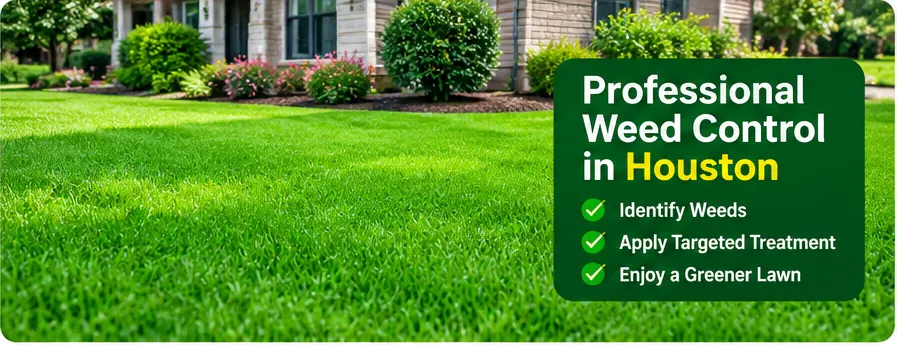
Consistent mowing and suitable watering help desirable turf compete with weeds.
Seasonal Weed Control Considerations in Houston
Weed activity changes throughout the year. Houston’s relatively mild winters and warm growing season mean property owners may notice different weeds at different times.
| Season | Potential weed activity | Management focus |
|---|---|---|
| Spring | Crabgrass and other summer annuals may begin emerging. | Identify weeds early; assess suitable preventive timing. |
| Summer | Warm-season weeds, sedges, and spurge may be noticeable. | Review irrigation, drainage, and turf health. |
| Fall | Cool-season annual weeds may begin germinating. | Assess fall prevention needs and grass tolerance. |
| Winter | Annual bluegrass, chickweed, and henbit may be visible. | Identify established weeds and avoid stressing dormant turf. |
This is a general seasonal guide, not a fixed spray calendar. Actual weed emergence depends on local weather, soil temperature, moisture, and plant species.
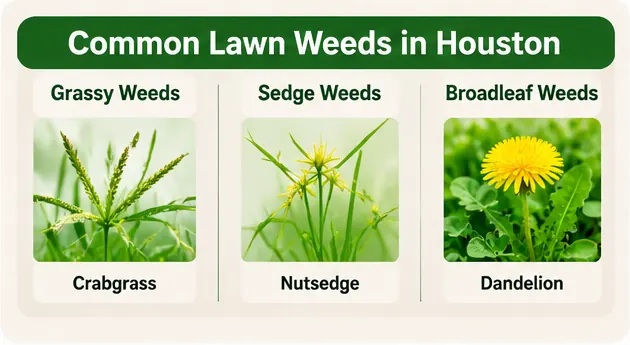
A healthy landscape depends on careful plant identification and appropriate maintenance.
Safe Weed Treatment for St. Augustine, Bermuda, and Zoysia
Houston lawns often contain St. Augustinegrass, Bermudagrass, or Zoysiagrass. Herbicide tolerance varies between grass species, and even products with similar purposes may have different restrictions.
St. Augustinegrass
St. Augustinegrass can be sensitive to certain herbicides. Never assume that a product suitable for Bermuda is safe for St. Augustine. Check the exact label and avoid applying products to stressed turf unless the label specifically allows it.
Bermudagrass
Bermudagrass has its own product tolerances and management requirements. Some weed-control options used on Bermuda may not be suitable for other warm-season grasses.
Zoysiagrass
Zoysiagrass can also be injured by unsuitable products or incorrect application. Confirm that the target weed and turf species are both covered by the product label.
Important Safety Practices Before Applying Weed Killer
Herbicides are regulated products that must be used according to their labels. Incorrect selection, mixing, or application can damage desirable grass, ornamental plants, and surrounding areas.
Identify First
Confirm whether the plant is a broadleaf weed, grassy weed, or sedge before selecting a treatment.
Check the Label
Verify the approved grass species, target weeds, application rate, weather restrictions, and safety instructions.
Protect Surroundings
Follow label precautions for people, pets, desirable plants, water, and neighboring properties.
- Do not apply a product to a turfgrass species that is not listed on its label.
- Avoid spraying during unsuitable wind or weather conditions stated on the label.
- Use the specified protective equipment and application method.
- Keep people and pets away for the period required by the label.
- Do not increase the application rate to try to speed up results.
- Do not mix products unless the labels specifically permit the combination.
When Should You Consider Professional Weed Control?
Some small weed patches can be managed with basic lawn-care practices. More persistent problems may require closer inspection, especially when the weed has underground structures, spreads quickly, or appears across several areas.
Consider comparing local service providers when:
- Weeds return soon after mowing or hand removal.
- You cannot confidently identify the plant.
- Large areas of the lawn are affected.
- You have St. Augustinegrass and are unsure which products are safe.
- Nutsedge or other persistent weeds continue to spread.
- You manage commercial grounds that need a coordinated maintenance plan.
Ask providers how they identify weeds, which turf species their proposed treatment is suitable for, what products may be used, and what precautions are required. Request a written estimate and clarify whether follow-up visits are included.
Discuss weed identification, treatment scope, and safety with a provider.
Residential and Commercial Weed Control in Houston
Residential Weed Control
Home lawns may have weeds along sidewalks, driveways, garden beds, fence lines, and thin sections of turf. A suitable plan considers grass type, yard use, pets, children, irrigation, and nearby ornamental plants.
Homeowners can compare providers based on weed identification, treatment methods, product information, pricing, and service timing.
Commercial Weed Control
Commercial properties may include offices, retail centers, apartment communities, and managed outdoor spaces. Weed management may need to coordinate with mowing, landscape maintenance, irrigation, and property access.
Property managers can ask about site inspections, service records, treatment precautions, and scheduling around tenants or visitors.
Combine Weed Control With Complete Lawn Maintenance
Weed management works best as part of a broader lawn-care routine. Removing weeds without improving weak turf or correcting drainage may not solve the underlying problem.
Explore these related HoustonLawnCare guides:
Healthy, dense turf is an important part of long-term weed prevention.
How to Explore Weed Control Services Through HoustonLawnCare
Finding a suitable provider begins with understanding your lawn and comparing available service options.
1. Describe Your Lawn
Share your general Houston location, property type, grass variety if known, and the areas affected by weeds.
2. Explain the Problem
Describe the weeds you have noticed, how long they have been present, and any previous treatment.
3. Compare Local Options
Review provider estimates, treatment details, availability, and safety precautions before making a decision.
HoustonLawnCare is an independent information and lead-generation resource. We do not perform weed-control treatments ourselves. Independent providers determine their own recommendations, prices, availability, and service delivery.
Frequently Asked Questions About Weed Control in Houston
1. What are the most common lawn weeds in Houston?
Common examples include crabgrass, nutsedge, clover, spurge, chickweed, and annual bluegrass. Which weeds appear depends on the season, lawn conditions, and grass variety.
2. What is the difference between pre-emergent and post-emergent weed control?
Pre-emergent products target susceptible weeds before they emerge. Post-emergent products target weeds that are already growing. The correct choice depends on the weed species and turfgrass label restrictions.
3. Is weed killer safe for St. Augustinegrass?
Not every herbicide is safe for St. Augustinegrass. Check the exact product label for approved turf species and application conditions before using any treatment.
4. Why does nutsedge keep coming back?
Nutsedge can spread through underground structures. Excess moisture and poor drainage may favor its growth. Mowing alone usually does not provide lasting control of established plants.
5. Can mowing alone control lawn weeds?
Mowing can reduce seed production for some weeds and support a dense lawn, but it does not control every established weed. Correct identification and suitable management are important.
6. When should I use pre-emergent weed control in Houston?
Timing depends on the target weed and local soil conditions. Apply only when the product timing, turfgrass type, and label directions are appropriate. Avoid relying on a single calendar date every year.
7. Does HoustonLawnCare provide weed spraying?
No. HoustonLawnCare is an independent lawn-care information and lead-generation website. Visitors can explore information and request connections with independent providers who handle estimates and service delivery.
Looking for Weed Control Options in Houston?
Explore local weed-control options for your home or commercial property. Share your lawn concerns and request a connection with an independent provider to discuss treatment options, estimates, and availability.
Request a Service Connection →HoustonLawnCare is an independent information and lead-generation website, not a weed-treatment contractor. Independent providers determine their own service details, prices, and availability.