
Lawn Fertilization Services in Houston, TX
Explore lawn fertilization options for your Houston property. Learn how soil testing, grass type, and seasonal timing can help support a greener, healthier lawn.
Request a Service Connection → Explore Fertilization GuideUnderstanding Lawn Fertilization in Houston
Lawn fertilization in Houston is about supplying turfgrass with the nutrients it needs while accounting for local soil conditions, rainfall, temperature, and grass variety. A suitable fertilizer program can support root development, healthy growth, and a more consistent lawn appearance.
Houston’s warm, humid climate supports several warm-season grasses, including St. Augustinegrass, Bermudagrass, and Zoysiagrass. These grasses do not always have identical nutrient requirements. The right approach depends on the lawn’s condition, sunlight exposure, soil test results, and how actively the grass is growing.
HoustonLawnCare is an independent lawn-care information and lead-generation website. We help homeowners and commercial property managers explore local service options and request connections with independent providers. We do not directly apply fertilizer or operate lawn-treatment crews.
Why Does Your Houston Lawn Need Fertilizer?
Grass uses nutrients to produce leaves, develop roots, and recover from ordinary environmental stress. Soil naturally contains some nutrients, but the available amount can vary from one property to another.
A properly planned lawn fertilizer program may help:
- Support healthy leaf and root development.
- Maintain appropriate turf density and color.
- Replace nutrients removed through grass growth and clipping collection.
- Support recovery during active growing periods.
- Address confirmed nutrient deficiencies.

A healthy lawn depends on suitable nutrients, soil conditions, and regular care.
Understanding NPK: The Three Main Fertilizer Nutrients
Most complete lawn fertilizers display three numbers on the package. These numbers represent the percentage by weight of nitrogen (N), phosphate (P₂O₅), and potash (K₂O). Together, they are commonly called the NPK ratio.
Nitrogen (N)
Nitrogen supports leaf growth and green color. Applying too much can cause excessive top growth and increase mowing needs or turf stress.
Phosphorus (P)
Phosphorus supports important plant processes and root development. Apply it when soil testing indicates it is needed rather than assuming every lawn requires it.
Potassium (K)
Potassium supports water regulation and several plant functions associated with overall turf performance and stress response.
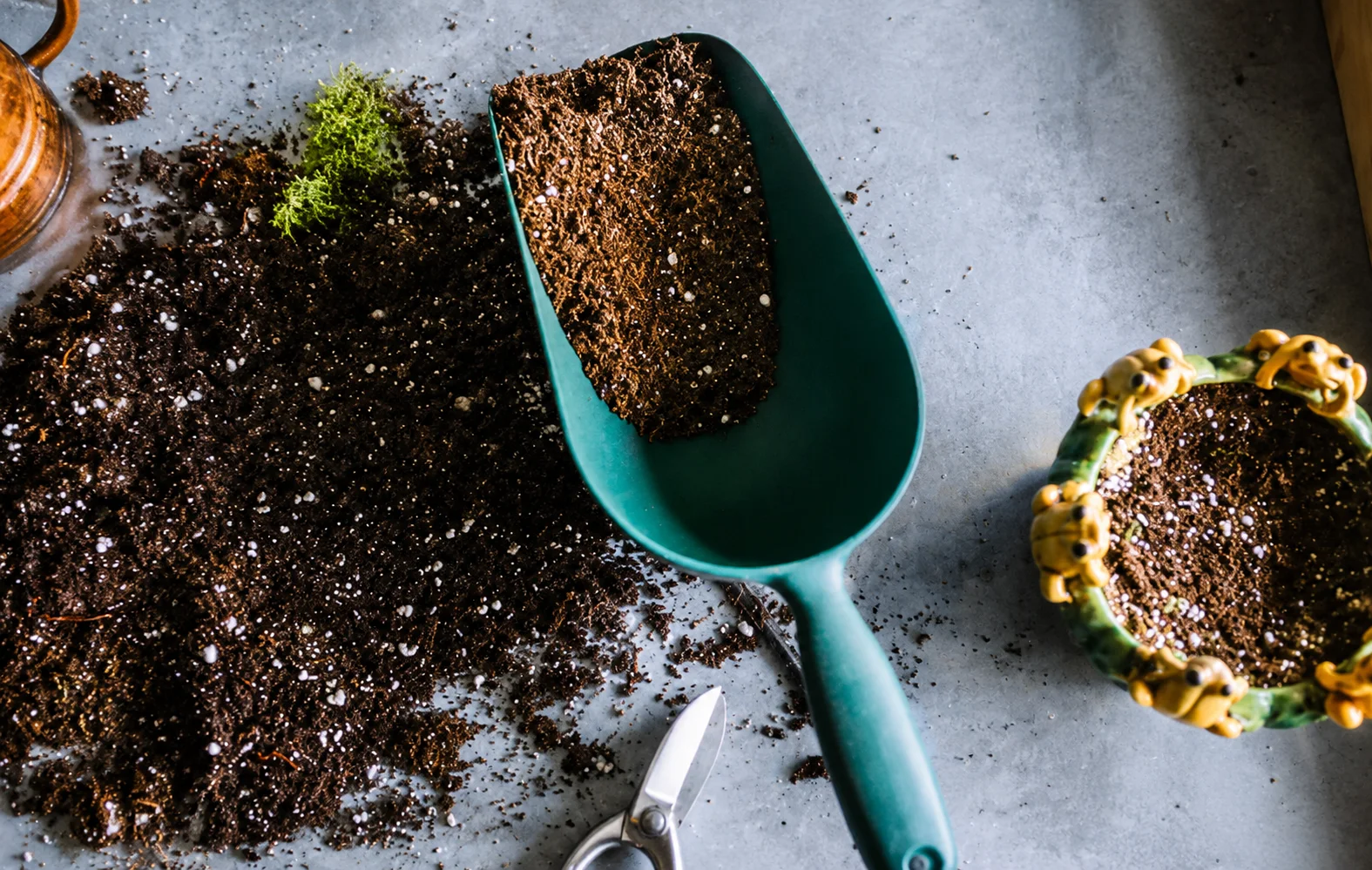
Soil conditions help determine which nutrients a lawn may need.
Why Soil Testing Matters Before Fertilizing
Soil testing is one of the most useful steps before choosing a fertilizer. It can identify soil pH and provide information about nutrient levels, helping property owners avoid unnecessary applications.
What a soil test can help identify
- Soil pH and whether it may affect nutrient availability.
- Phosphorus and potassium levels.
- Potential nutrient imbalances.
- Whether a fertilizer containing certain nutrients is appropriate.
For a useful sample, collect soil from several representative spots in the lawn, follow the testing laboratory’s instructions, and avoid mixing areas with very different conditions. A lawn with unusual yellowing or weak growth may need diagnosis beyond a fertilizer application.
Fertilizer Needs for Common Houston Grass Types
Houston lawns commonly contain warm-season turfgrass. St. Augustinegrass, Bermudagrass, and Zoysiagrass differ in growth habits, mowing requirements, and nutrient needs. Even lawns with the same grass variety can require different programs depending on soil, shade, irrigation, and lawn use.
St. Augustinegrass
A popular choice for Houston residential lawns. Its nutrient program should account for sunlight, soil type, cultivar, and active growth. Shaded turf generally needs a more conservative nitrogen approach.
Bermudagrass
A vigorous warm-season grass often used in sunny lawns and active-use areas. Its nutrient needs vary with the variety, maintenance level, and growing conditions.
Zoysiagrass
A dense warm-season turf that can require a different maintenance approach from St. Augustinegrass or Bermuda. Avoid applying fertilizer without considering its growth and soil needs.
When to Fertilize a Lawn in Houston
Fertilizer timing should follow the grass’s active growth rather than a fixed calendar date. Houston’s weather can shift from mild conditions to intense summer heat, so observe the lawn and follow local turf recommendations.
Spring
Warm-season grasses begin active growth as temperatures rise. For St. Augustinegrass, Texas A&M guidance recommends waiting until the lawn has been mowed at least twice before the first spring nitrogen application.
Summer
Grass may continue growing actively, but heat, drought stress, and heavy rainfall can affect fertilizer decisions. Avoid excessive applications and follow the product label.
Fall
Late-season nitrogen timing matters. For St. Augustinegrass, Texas A&M guidance generally recommends making the final nitrogen application at least four to six weeks before the historical first frost date.
Winter
Most warm-season lawns slow down or become dormant. Do not fertilize dormant turf with nitrogen simply because a calendar schedule says it is time.

Seasonal lawn care should respond to active grass growth and local conditions.
General Annual Nitrogen Guidance for Warm-Season Grass
The figures below are broad reference ranges for annual nitrogen, not a fertilizer application prescription. Actual needs depend on grass variety, soil type, shade, growing conditions, and maintenance intensity. A soil test and current local turf guidance should take priority.
| Grass type | General annual nitrogen range | Important consideration |
|---|---|---|
| St. Augustinegrass in sun | About 2–3 lb N per 1,000 sq. ft. | Adjust for cultivar, soil, and growth. |
| St. Augustinegrass in shade | About 1–2 lb N per 1,000 sq. ft. | Use a conservative approach in shaded areas. |
| Common Bermudagrass | About 2–3 lb N per 1,000 sq. ft. | Higher-maintenance lawns may differ. |
| Zoysiagrass | About 2–3 lb N per 1,000 sq. ft. | Grass variety and soil conditions matter. |
These are general reference ranges drawn from Texas warm-season turf guidance. They should not replace a site-specific soil test or the fertilizer label. Annual nitrogen is normally divided into measured applications rather than applied all at once.
Types of Lawn Fertilizer Available
Different fertilizer products use different formulations and application methods. The most suitable option depends on the lawn’s nutrient requirements, product label, and application conditions.
Granular Fertilizer
Granular products are dry particles spread over the lawn using a broadcast or drop spreader. Some products release nutrients relatively quickly, while others are formulated for slower release.
Liquid Fertilizer
Liquid products are mixed or supplied in a ready-to-use formulation and applied according to label directions. Correct dilution and even coverage are important.
Slow-Release Fertilizer
Slow-release formulations are designed to make nutrients available over a longer period. Release patterns depend on the product and environmental conditions.
Organic Fertilizer
Organic products use materials derived from plant, animal, or other natural sources. Their nutrient content and release rates vary, so read the label and avoid assuming that natural products cannot cause overapplication.

Choose a fertilizer formulation based on actual lawn requirements.
Common Lawn Fertilization Mistakes to Avoid
Applying Too Much Nitrogen
Excess nitrogen can cause rapid leaf growth, increase mowing needs, and contribute to turf stress. Measure the lawn area and product rate carefully.
Ignoring Soil Test Results
Applying nutrients that the soil does not need can waste money and increase the risk of runoff. Test first when possible.
Fertilizing Before Heavy Rain
Heavy rainfall can move nutrients away from the target lawn. Check the weather and follow label instructions for watering and application conditions.
Using the Wrong Product
Products differ in nutrient ratios, release rates, and intended uses. Select one appropriate for the grass and the identified need.
Fertilizing Dormant Grass
Warm-season turf has periods of slower growth. Nitrogen applications should be timed for active growth and local recommendations.
Misdiagnosing Yellow Grass
Yellowing can be caused by insects, disease, poor drainage, drought, or other problems—not only nutrient deficiency.
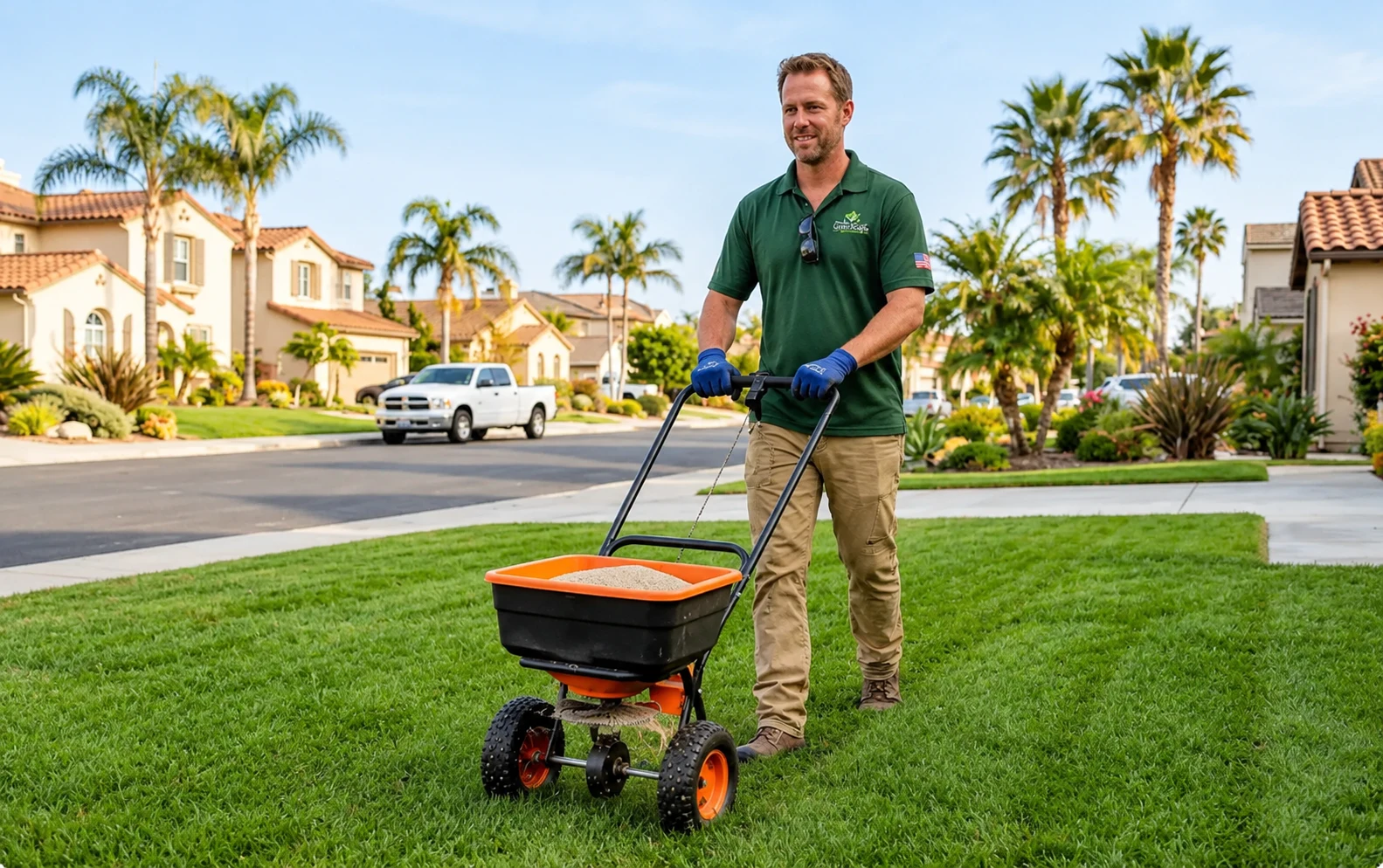
Even application and careful product handling help reduce avoidable problems.
Safe Fertilizer Application and Runoff Prevention
Responsible fertilizer use protects the lawn and helps reduce the movement of nutrients into storm drains and waterways. Houston’s rainfall can create runoff risks when fertilizer is applied carelessly.
- Read and follow all product label directions.
- Measure the lawn area and calculate the correct application rate.
- Keep fertilizer off sidewalks, driveways, streets, and drainage areas.
- Sweep stray granules back onto the lawn where appropriate.
- Avoid application before heavy rainfall.
- Store products securely, away from children and pets.
- Water the lawn only as directed by the product label.
Never mix or apply products in a way that conflicts with their labels. If a lawn has a suspected pest or disease problem, identify the cause before choosing a treatment.
When Is Professional Lawn Fertilization Worth Considering?
Some property owners prefer to manage basic lawn care themselves. Others explore professional help when they have a large lawn, uncertain soil conditions, persistent turf problems, or limited time for measuring and applying products.
Situations where you may want to compare local providers
- Your lawn has recurring yellowing or uneven growth.
- You are unsure which fertilizer is suitable for your grass type.
- You want to understand soil testing and nutrient recommendations.
- Your property includes several lawn areas with different sunlight conditions.
- You manage commercial grounds and need a consistent maintenance plan.
Before choosing a provider, ask what the service includes, whether soil testing is available, which products may be used, how application rates are determined, and whether the estimate includes follow-up visits. Ask for the provider’s relevant qualifications and insurance details directly rather than assuming they are included.
Residential and Commercial Lawn Fertilization in Houston
Residential Lawn Fertilization
Home lawns may include front yards, backyards, shaded areas, and high-traffic spaces. A suitable approach considers grass type, soil conditions, irrigation, pets, children, and how the property is used.
Homeowners can compare local providers and ask about product selection, application timing, and any precautions required after treatment.
Commercial Lawn Fertilization
Commercial properties may include office buildings, retail locations, apartment communities, and managed grounds. These sites often need coordinated lawn maintenance and clear scheduling.
Property managers can ask providers about site assessments, service documentation, application procedures, and coordination with mowing or irrigation schedules.
How to Explore Lawn Fertilization Services Through HoustonLawnCare
Finding a suitable lawn-care provider starts with understanding your property and comparing the services available in your area.
- Describe your property: Share whether the lawn is residential or commercial and provide its general location.
- Explain your lawn concerns: Mention grass type if known, yellowing, thin growth, or previous fertilizer applications.
- Review service options: Compare the scope of work, estimated cost, product details, and provider availability.
- Discuss the next steps: The independent provider can explain its assessment, estimate, schedule, and service terms.
HoustonLawnCare is an independent information and lead-generation resource. We do not provide fertilizer applications ourselves. Independent providers determine their own pricing, availability, recommendations, and service delivery.
Keep Your Houston Lawn Healthy Beyond Fertilization
Fertilizer is only one part of a complete lawn-care routine. Healthy turf also depends on appropriate mowing, irrigation, drainage, weed management, and seasonal maintenance.
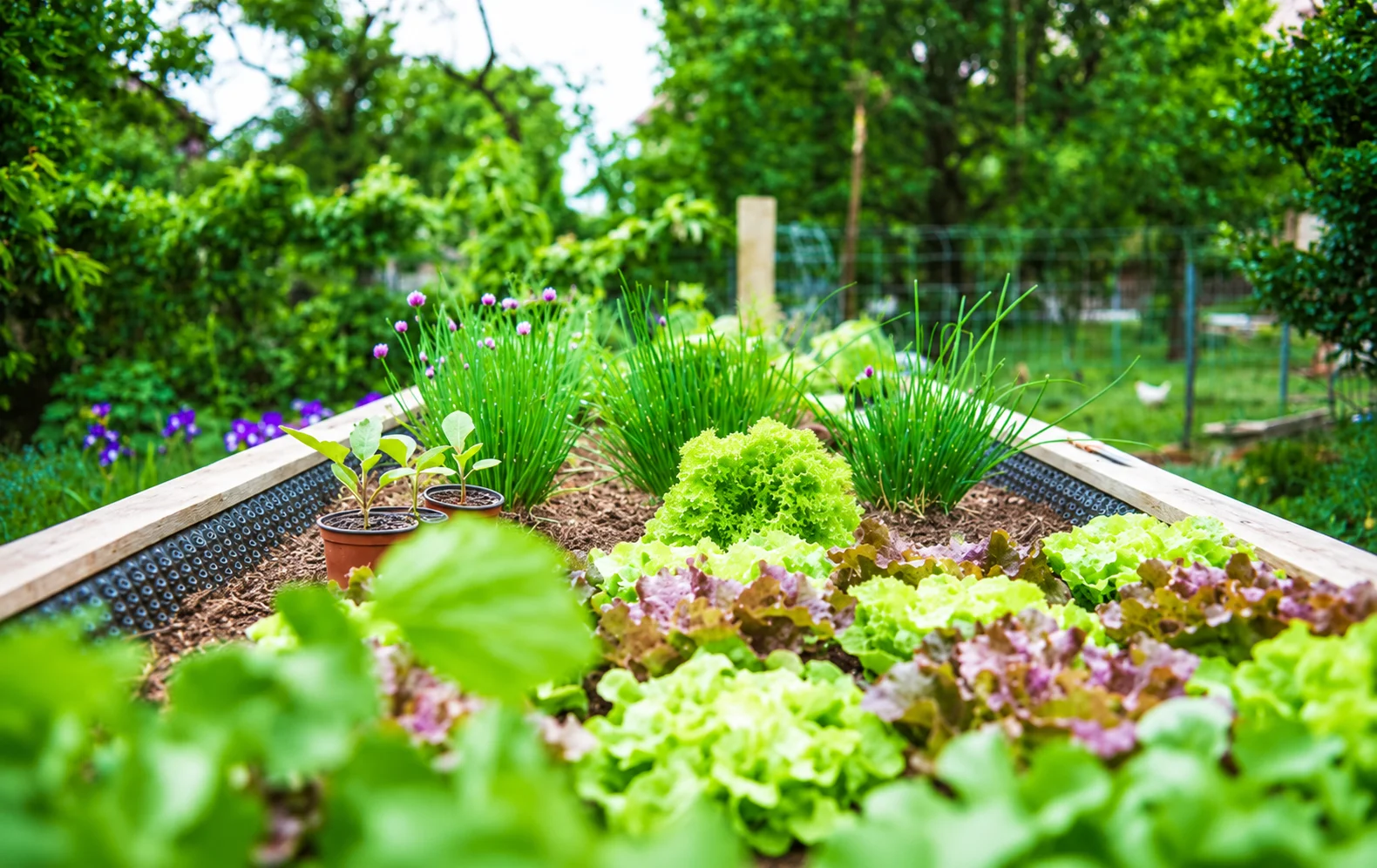
Consistent mowing, watering, and maintenance complement a suitable fertilizer plan.
Frequently Asked Questions About Lawn Fertilization in Houston
1. How often should I fertilize my Houston lawn?
It depends on the grass type, soil conditions, lawn use, and fertilizer program. Warm-season grass is generally fertilized during active growth. Use soil test results and current Texas turf recommendations to determine whether an application is needed.
2. What is the best fertilizer for St. Augustinegrass in Houston?
There is no single best fertilizer for every St. Augustine lawn. The appropriate NPK ratio and application rate depend on soil test results, sunlight, cultivar, and growing conditions.
3. Should I test my soil before applying fertilizer?
Yes, soil testing is a useful way to understand pH and nutrient levels. It can help prevent unnecessary phosphorus or potassium applications and guide a more suitable fertilizer choice.
4. Can fertilizer fix yellow patches in my lawn?
Not always. Yellow patches may result from nutrient deficiencies, chinch bugs, large patch disease, take-all root rot, drought stress, or poor drainage. Identify the cause before applying fertilizer or pesticide.
5. Is liquid fertilizer better than granular fertilizer?
Neither is automatically better. Both have different formulations and application requirements. The right option depends on the lawn’s needs, product label, and application method.
6. Can I fertilize my lawn before heavy rain?
Avoid applying fertilizer when heavy rainfall is expected. Rain can move nutrients away from the lawn and into drainage systems. Follow the product label and local recommendations.
7. Does HoustonLawnCare apply fertilizer?
No. HoustonLawnCare is an independent lawn-care information and lead-generation website. Visitors can explore service information and request connections with independent local providers. Those providers handle estimates and service delivery.
Looking for Lawn Fertilization Options in Houston?
Explore local lawn-care options for your home or commercial property. Share your requirements and request a connection with an independent provider to discuss availability, estimates, and service details.
Request a Service Connection →HoustonLawnCare is an independent information and lead-generation website, not a lawn-treatment contractor. Service details, pricing, and availability are determined by independent providers.