
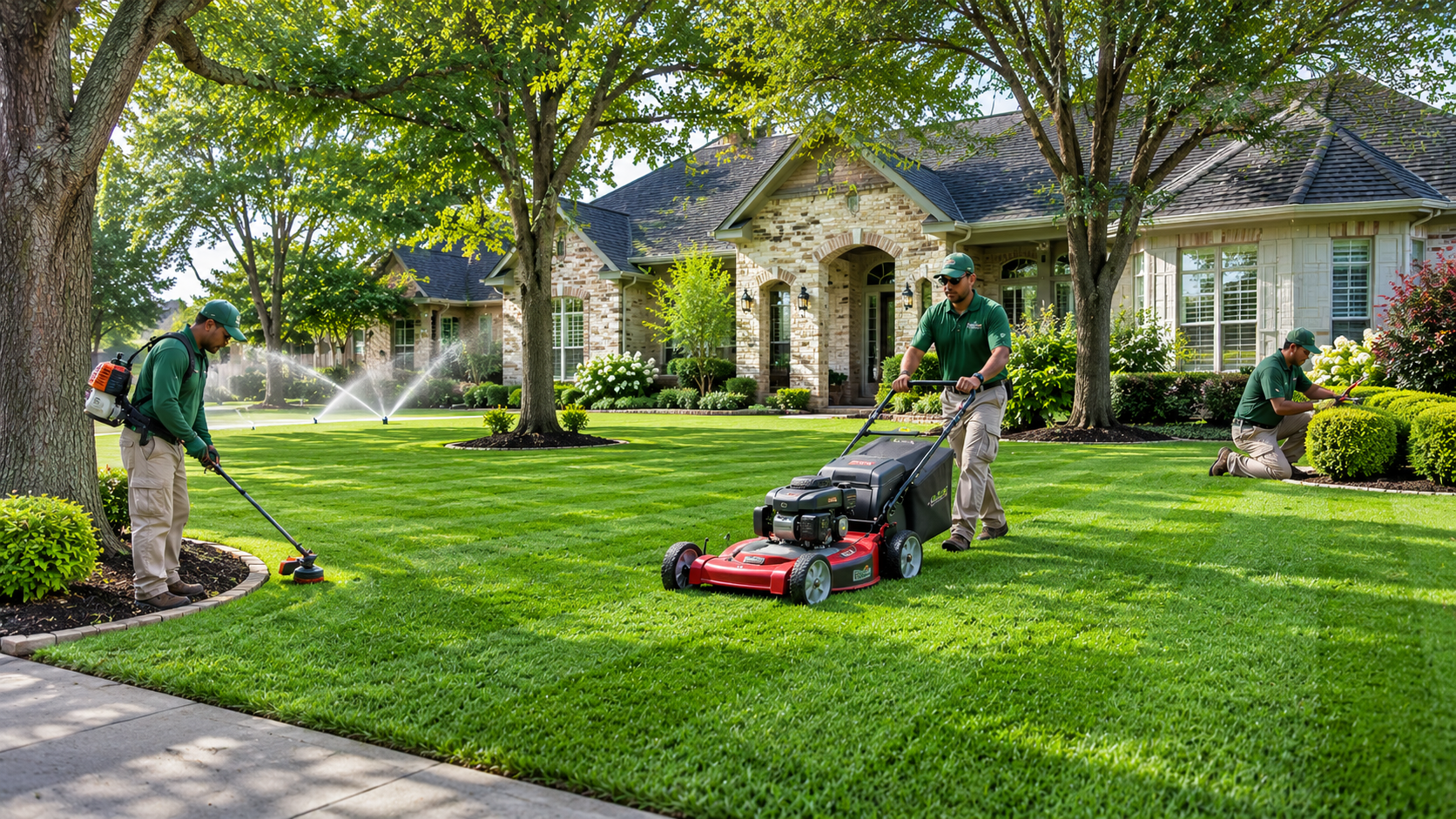
Lawn Maintenance in Houston, TX: A Complete Guide
A healthy lawn needs more than occasional grass cutting. Learn how Houston lawn maintenance works, from watering and fertilization to weed prevention, seasonal care, and common warm-season grass problems. Explore service options for residential and commercial properties.
Explore Local Maintenance OptionsWhy Lawn Maintenance Is Important in Houston
Maintaining a lawn in Houston, Texas means working with warm temperatures, humid conditions, rainfall, and changing seasonal growth. These factors influence how quickly grass grows and how much attention a property needs.
Common local turf varieties include St. Augustine grass, Bermuda grass, and Zoysia grass. Each has different requirements for mowing height, irrigation, nutrient management, and general upkeep.
A consistent lawn maintenance routine can help keep turf at a suitable height, manage weeds, monitor soil conditions, and identify signs of insect or disease damage. It also helps property owners plan work before small issues become larger problems.
HoustonLawnCare is an independent lawn-care information and lead-generation website. It helps visitors explore services and request connections with independent local providers.
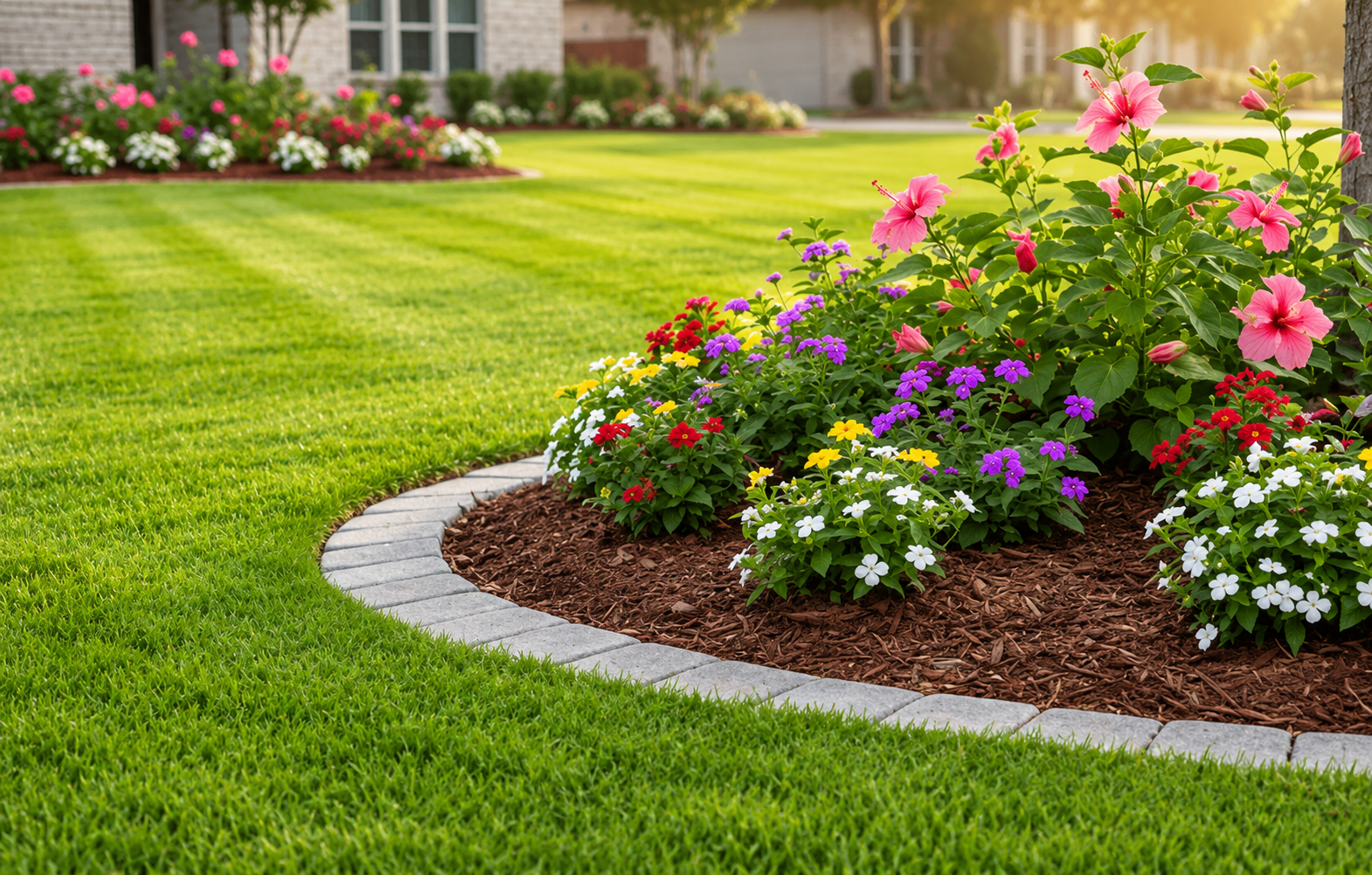
What Does Lawn Maintenance Include?
The term lawn maintenance covers several activities. The exact work depends on the property’s size, grass variety, condition, and the services arranged with an independent provider.
Lawn Mowing and Edging
Regular grass cutting keeps turf at a suitable height. Edging helps create cleaner borders along sidewalks, driveways, and garden beds. Mowing frequency should follow grass growth rather than a rigid calendar.
Watering and Irrigation
Appropriate lawn irrigation supplies moisture to the root zone. Water requirements change with rainfall, temperature, soil type, and signs of drought stress.
Fertilization
Lawn fertilization supplies nutrients such as nitrogen, phosphorus, and potassium when needed. Soil testing helps guide nutrient decisions.
Weed Management
Identifying broadleaf weeds, grassy weeds, and sedges helps determine suitable prevention or control methods for the particular turfgrass.
Yard Cleanup
Leaf removal, branch collection, and clearing heavy debris can help prevent material from covering grass and keep outdoor areas orderly.
Soil and Turf Care
Monitoring soil compaction, drainage, thatch, and root health helps identify when additional turf-care practices may be appropriate.
How Houston’s Climate Affects Lawn Maintenance
Houston’s warm, humid climate supports active growth in many warm-season grasses. However, heat, heavy rainfall, periods of dry weather, and shaded areas can all influence lawn condition.
Summer Heat and Drought Stress
During hot, dry periods, turf may show a dull or bluish color, folded leaves, or footprints that remain visible. These can be signs of drought stress. Check soil moisture before increasing irrigation, because symptoms can overlap with insect damage or disease.
Humidity, Rainfall, and Drainage
Rain can reduce the need for sprinkler use, but persistently wet soil and poor drainage may create conditions associated with turf disease. Watch for standing water, soggy areas, and patches that do not dry at the same rate as surrounding grass.
Shade and Soil Conditions
Trees, buildings, and fences can limit sunlight and influence turf growth. Soil compaction can also restrict air and water movement around roots. Grass selection should account for the amount of sunlight and the way the lawn is used.
Lawn Maintenance for Common Houston Grass Types
Grass identification is an important first step because different turf varieties respond differently to mowing, sunlight, irrigation, and nutrient applications.
St. Augustine Grass
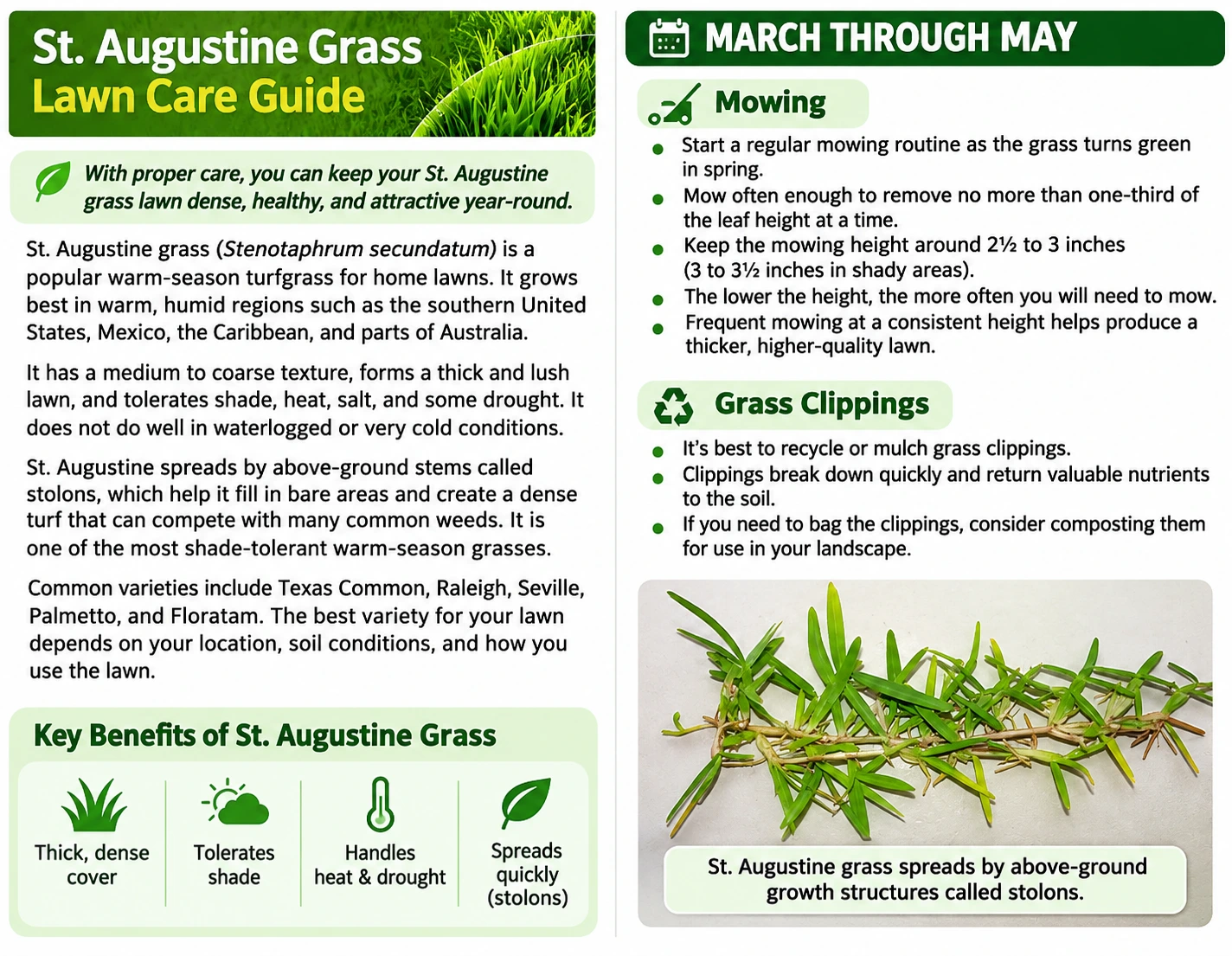
St. Augustine grass is widely used in southern residential lawns. Texas A&M guidance describes it as a warm-season grass that spreads through above-ground stems called stolons. It tolerates some shade but does not tolerate waterlogged soil.
Maintenance example
Monitor mowing height, avoid excessive fertilizer and irrigation, and watch for chinch bugs, large patch, and take-all root rot.
Bermuda Grass
Bermuda grass is a warm-season turf often selected for sunny areas. It can grow actively during warm weather and may require frequent mowing to maintain a consistent appearance.
Maintenance example
Monitor growth, sunlight, mowing frequency, and irrigation. Avoid removing too much leaf tissue in a single mowing.
Zoysia Grass
Zoysia grass is another warm-season turfgrass used in residential landscapes. Maintenance varies by cultivar and site conditions.
Maintenance example
Follow the variety’s mowing recommendations and monitor thatch, soil compaction, and water movement through the soil.
Proper Lawn Watering and Irrigation
Good lawn watering is about applying enough moisture to reach the root zone without creating runoff or keeping soil constantly wet. Water needs vary with rainfall, soil type, grass variety, and weather.
How to Check Sprinkler Coverage
Texas A&M’s St. Augustine guidance describes a simple sprinkler test: place several straight-sided containers around the lawn, run the irrigation system for a set period, and compare the amount of water collected.
Example of a simple irrigation test
If five containers collect 0.5, 0.4, 0.6, 0.4, and 0.6 inches of water, their average is 0.5 inches. This shows how much water the system applied during the test period. Uneven amounts may indicate that sprinkler coverage needs attention.
- Check soil moisture before watering again.
- Water early in the morning when practical.
- Inspect sprinkler heads for blockages or misalignment.
- Adjust irrigation after rainfall.
- Use shorter cycles if water runs off before soaking in.
Fertilization, Soil Testing, and Thatch Management
Fertilizer should be selected according to the lawn’s nutrient needs. The three numbers on a fertilizer label represent nitrogen (N), phosphorus (P), and potassium (K). These nutrients serve different roles in plant growth.
Why Soil Testing Matters
A soil test can help determine soil pH and identify nutrients that may be lacking. This is more useful than assuming a lawn needs a fertilizer application simply because its color is not dark green.
Understand Thatch and Compaction
Thatch is a layer of living and dead plant material between the soil surface and green grass blades. Excessive thatch can interfere with water movement and contribute to turf stress. Soil compaction reduces pore space and can restrict root growth.
When should aeration be considered?
Core aeration may be useful where soil is compacted, particularly in areas receiving heavy foot traffic. It should be considered based on actual soil and turf conditions, not treated as a compulsory task for every lawn.
Common Houston Lawn Problems to Monitor
Chinch Bugs
Southern chinch bugs are important pests of St. Augustine lawns. Their feeding can cause yellowing and brown patches that may resemble drought stress. Inspect the affected area before choosing a treatment.
Large Patch Disease
Large patch can cause irregular areas of discolored turf. Moisture and environmental conditions can influence disease development. Diagnosis matters because similar symptoms may have different causes.
Take-All Root Rot
Take-all root rot can affect warm-season grasses, including St. Augustine and Bermuda. Yellowing foliage and damaged roots may occur. Check roots and site conditions rather than treating by appearance alone.
Do Not Diagnose Every Brown Patch as the Same Problem
Brown grass can result from drought stress, insect feeding, disease, poor drainage, shade, or other conditions. For example, a dry patch near a sprinkler gap may need irrigation correction, while a spreading patch with damaged roots may require a different investigation.
Avoid applying pesticides or fungicides without identifying the likely cause. Follow product labels and seek qualified turf advice when symptoms are unclear or widespread.
A Seasonal Lawn Maintenance Checklist for Houston
This is a general planning guide, not a fixed treatment calendar. Actual timing depends on turf variety, weather, and local conditions.
| Season | Maintenance priorities |
|---|---|
| Spring | Watch for active green-up, resume mowing as growth returns, assess weeds, and plan soil-based nutrient management. |
| Summer | Monitor irrigation, mowing height, heat stress, insects, and disease symptoms. |
| Fall | Adjust mowing and watering as growth slows, remove heavy leaf cover, and plan appropriate seasonal weed prevention. |
| Winter | Reduce unnecessary work when warm-season turf is dormant and monitor moisture during prolonged dry weather. |
How to Choose a Lawn Maintenance Provider in Houston
Before comparing Houston lawn maintenance services, identify what your property actually needs. A small residential lawn may need routine mowing and edging, while a commercial property may require a broader grounds-maintenance schedule.
Questions to Ask Before Arranging Service
- Which tasks are included in the proposed maintenance service?
- Does the estimate include mowing, edging, trimming, and cleanup?
- How often will the property be visited during active growth?
- Are fertilization and weed treatments separate services?
- How are weather delays and schedule changes handled?
- Can the provider explain its relevant experience and applicable insurance?
- Are additional charges explained before work begins?
Residential and Commercial Lawn Maintenance
Residential lawn maintenance may involve front yards, backyards, garden borders, and outdoor living spaces. Commercial lawn maintenance may involve offices, retail properties, managed communities, and shared outdoor areas. Service frequency and scope should reflect the property’s use and requirements.
Frequently Asked Questions About Lawn Maintenance in Houston
How often should a lawn be maintained in Houston?
It depends on grass type, growth rate, weather, and property needs. Mowing may be more frequent during active growth, while fertilization, aeration, and weed management follow different schedules.
What grass is common in Houston lawns?
St. Augustine grass is widely used in Houston-area residential landscapes. Bermuda and Zoysia are also found in the region.
Does lawn maintenance include fertilization?
Not always. Some maintenance arrangements focus on mowing, edging, and cleanup. Fertilization and weed-control treatments may be separate services, so confirm the scope before accepting an estimate.
Why does my Houston lawn have brown patches?
Brown patches can be associated with drought stress, chinch bugs, disease, poor drainage, or other conditions. Check the grass, soil moisture, roots, and affected area before choosing a treatment.
Is lawn aeration necessary every year?
Not for every property. Aeration may help where soil compaction restricts water and air movement. Consider the lawn’s condition and use rather than following a universal schedule.
Does HoustonLawnCare perform lawn maintenance?
No. HoustonLawnCare is an independent lawn-care information and lead-generation website. It helps visitors explore services and request connections with independent local providers. Those providers handle their own estimates, pricing, scheduling, and service delivery.
Looking for Lawn Maintenance Options in Houston?
Every lawn has different needs. Whether you are exploring routine maintenance, irrigation, fertilization, weed management, or seasonal cleanup, start by describing your property and the work you are considering.
HoustonLawnCare helps visitors request connections with independent local providers where available. You can discuss the scope of work, estimates, and scheduling directly with the provider.
Request a Service Connection →HoustonLawnCare is an independent information and lead-generation website, not a lawn maintenance contractor. Independent providers determine their own services, estimates, prices, availability, and service arrangements. Information submitted through a request form may be shared with providers as described in the form’s privacy notice and consent terms.